.
Join A Small Group Of Elite Entrepreneurs TODAY...
And Finally Create The Life, Freedom, And Wealth You Want!

STRATEGIC EDGE 01 AI IS MOVING INTO THE OPERATING MODEL. IS GOVERNANCE KEEPING UP?
The question for a DIFC investment business is no longer whether to use AI. It is whether the operating model is ready to govern what has already been adopted.
+
AI IS MOVING INTO THE OPERATING MODEL. IS GOVERNANCE KEEPING UP?
The question for a DIFC investment business is no longer whether to use AI. It is whether the operating model is ready to govern what has already been adopted.
I don't think the interesting question for a DIFC investment business is whether to use AI anymore. That decision has effectively been made — it's already in the workflow, whether or not it's been formally sanctioned. The question I actually sit with is narrower: is our operating model ready to govern what we've adopted?
That's a COO question before it's a technology question, and I think a lot of firms are still treating it as the reverse.
Rarely in the model itself. In my experience it sits in the things around the model — accountability that was never clearly assigned, controls that were designed for a pre-AI process and never revisited, data that's more fragmented than anyone likes to admit, and decision rights that are genuinely ambiguous once a machine is producing part of the output.
The technology is usually fine. The operating environment it's been dropped into often isn't ready for it.
Where is AI being used across the business — including the places nobody formally approved. Who owns the decision that comes out the other end of it. What sits around that output before it reaches a client, a trade, or a regulator.
How is it validated, and by whom. And, honestly, could our operating model absorb this without quietly creating a new category of operational or regulatory risk we haven't named yet.
The DFSA's 2026 AI survey confirmed something I'd already suspected from inside the room: adoption is running well ahead of governance across the DIFC, not because firms are being reckless, but because governance is harder to build quickly than the technology is to switch on.
I want AI to make the business genuinely better — faster decisions, better-informed ones, less manual drag. But not at the cost of letting the technology outrun our ability to govern it.
That's not caution for its own sake. In a regulated environment, ungoverned capability isn't an efficiency gain — it's a liability sitting quietly on the balance sheet until someone asks about it.
The firms that get this right won't be the ones that moved fastest. They'll be the ones whose governance moved at the same speed as their adoption.
STRATEGIC EDGE 02 GROWTH IS EASY. BUILDING THE SUBSTANCE TO SUPPORT IT ISN'T.
The challenge was never building an investment business in the DIFC. It's building an operating model that can withstand real scrutiny while the business keeps growing.
+
GROWTH IS EASY. BUILDING THE SUBSTANCE TO SUPPORT IT ISN'T.
The challenge was never building an investment business in the DIFC. It's building an operating model that can withstand real scrutiny while the business keeps growing.
I've come to think growth is the easy part. Any capable team can raise the next ticket, sign the next mandate, open the next product line. What's hard — and what most people underestimate — is building the substance underneath that growth so it can actually withstand the scrutiny that comes with it.
That's not a regulatory box-ticking exercise. It's the real question I sit with: does this business have the people, governance, decision-making and infrastructure to demonstrate it's genuinely being run here — not just registered here.
Prudential expectations in the DIFC are evolving, and institutional capital has become far more selective than it was even a few years ago. A presence is no longer enough. Allocators and regulators are both asking a version of the same question now: is the substance real, or is it a letterhead.
I don't think that's an unreasonable bar. But it does mean the operating model has to do more work than it used to.
On the operating model, every time. Capital requirements, risk management, governance, reporting, investment operations, accountability — all of it gets heavier as the business grows. And none of it is allowed to slow the business down while it's happening. That tension is the job.
I've seen firms solve this by adding control at the expense of commercial responsiveness, and I've seen the reverse — commercial speed with control quietly left behind. Neither holds up for long.
My job is to connect the pieces — regulation, governance, people, process, technology, execution — into something coherent enough that the operating structure supports the investment business, rather than becoming the thing it has to work around.
When I get that right, nobody notices the operating model at all. They only notice when it's missing.
The strongest operating models don't choose between control and growth. They build the structure that makes both possible.
STRATEGIC EDGE 03 ARE INVESTORS BUYING YOUR STRATEGY — OR QUIETLY PRICING YOUR PLATFORM?
Every allocator says yes to the thesis in the first meeting. What actually decides the mandate happens later, in the questions nobody puts on the agenda.
+
ARE INVESTORS BUYING YOUR STRATEGY — OR QUIETLY PRICING YOUR PLATFORM?
Every allocator says yes to the thesis in the first meeting. What actually decides the mandate happens later, in the questions nobody puts on the agenda.
I've sat in enough due diligence rooms to notice the pattern. The strategy gets everyone nodding early. Then, somewhere around hour two, the questions quietly shift — away from the thesis and onto us. Who signs off on this. What happens when something breaks. Who actually owns the number in that report.
That shift is the real test. Institutional investors aren't only underwriting an idea. They're underwriting their own confidence that the organisation behind it can actually deliver it, quarter after quarter, without drama.
A compelling strategy is what gets you the meeting. It's rarely what gets you the mandate. By the time an institutional allocator is deep in diligence, the strategy is almost a given — what they're really pressure-testing is governance, controls, decision-making, operational resilience, reporting and accountability.
I've watched strong strategies stall at this stage for reasons that had nothing to do with performance. The platform behind them simply didn't hold up to the questions being asked of it.
Not "is the strategy compelling" — the strategy got us in the room. The question I sit with is whether the organisation is built well enough that an investor walks out believing we can actually deliver what we've just described to them, under pressure, without it being a one-off.
That's a platform question, not a portfolio question. And it's the one I spend most of my time on, because it's the one that's easy to underinvest in while everyone's attention is on performance.
The investment strategy may win the meeting. The operating platform is what wins the mandate.
STRATEGIC EDGE 04 GETTING INTO DIFC IS EASY. STAYING AHEAD OF YOUR OWN GROWTH ISN'T.
New investment, FinTech and financial-services firms are entering DIFC at pace. The harder test comes after the launch — when the business starts outgrowing the structure that got it there.
+
GETTING INTO DIFC IS EASY. STAYING AHEAD OF YOUR OWN GROWTH ISN'T.
New investment, FinTech and financial-services firms are entering DIFC at pace. The harder test comes after the launch — when the business starts outgrowing the structure that got it there.
I've watched a lot of firms get into DIFC quickly and confidently. Fewer of them think hard enough, early enough, about what comes after that. Getting in is the beginning. The real test is whether the business is actually ready for what it's about to become.
Early on, speed is easy. There are fewer layers, fewer people, fewer processes standing between a decision and its execution. I've relied on that simplicity myself. But it doesn't last, and it rarely announces its own expiry date.
More clients. More capital. More regulatory expectation. More operational dependencies. More decisions that now need to be made properly, and documented properly, rather than made quickly and remembered.
What worked when the firm was small isn't a smaller version of what it needs later — it's often simply not strong enough for the next stage. I've seen that gap catch founders off guard more than once, because nothing visibly broke until it did.
Not "who do we need to hire." That question comes too late and answers the wrong problem. The one I actually ask is: what leadership and operating capability will this business need as it scales — not the business we're running today, but the one we're becoming in twelve or eighteen months.
Where will operational pressure show up first. Which responsibilities need experienced ownership before they become urgent. Can governance actually keep pace with growth, or is it already a step behind. Are the systems and controls being built now, while there's still room to build them properly, or later, under pressure, when there isn't.
The objective isn't to build a large organisation. It's to build the right one — before growth forces the decision for you.
STRATEGIC EDGE 05 SCALING OUTPACES LEADERSHIP — LONG BEFORE ANYONE ADMITS IT
The business is growing, the board is pleased, and everyone assumes the leadership team will simply scale with it. It rarely does — because the job itself has quietly changed underneath them.
I've watched this happen from inside the room more than once: the business is growing, the board is pleased, and everyone assumes the leadership team will simply scale with it. It rarely does — not because the people aren't good, but because the job itself has quietly changed underneath them.
More capital. More products. More regulators asking sharper questions. More stakeholders who each want a different kind of assurance. None of that shows up as a single dramatic event. It shows up as friction — decisions that used to take a day now take three, a control function that reports numbers but doesn't actually govern anything, a board pack that looks fine until someone asks the second question.
The Instinct
The instinct is to fix this by hiring seniority. A bigger name, a longer CV, a title that matches the scale you're now operating at. I understand the instinct — I've had that instinct myself. But title and pedigree tell you almost nothing about whether someone can operate your business through your specific pressure point.
The Question
The question I've learned to ask isn't "has this person done the job before." It's narrower and harder to answer: has this person operated through circumstances that actually resemble what we're facing right now — a license variation under scrutiny, a control environment being rebuilt mid-audit, a capital raise where the story has to survive real diligence?
Those are different capabilities. Building something from nothing is not the same skill as governing an established function under regulatory obligation. Scaling a team is not the same as integrating one after an acquisition. I've done more than one of these — they don't transfer as cleanly as people assume.
The Mistake
The mistake I see most often, in my own decisions as much as anyone else's, is defining the hire by the vacancy rather than by what the business actually needs to be true twelve months from now. Fix that question first. The right profile follows from it — not the other way around.
The objective isn't to build a large organisation. It's to build the right one — before growth forces the decision for you.
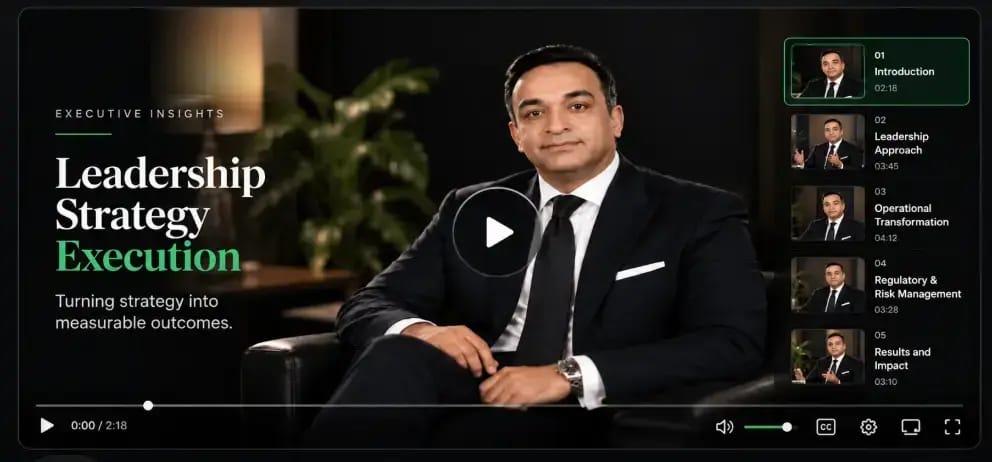

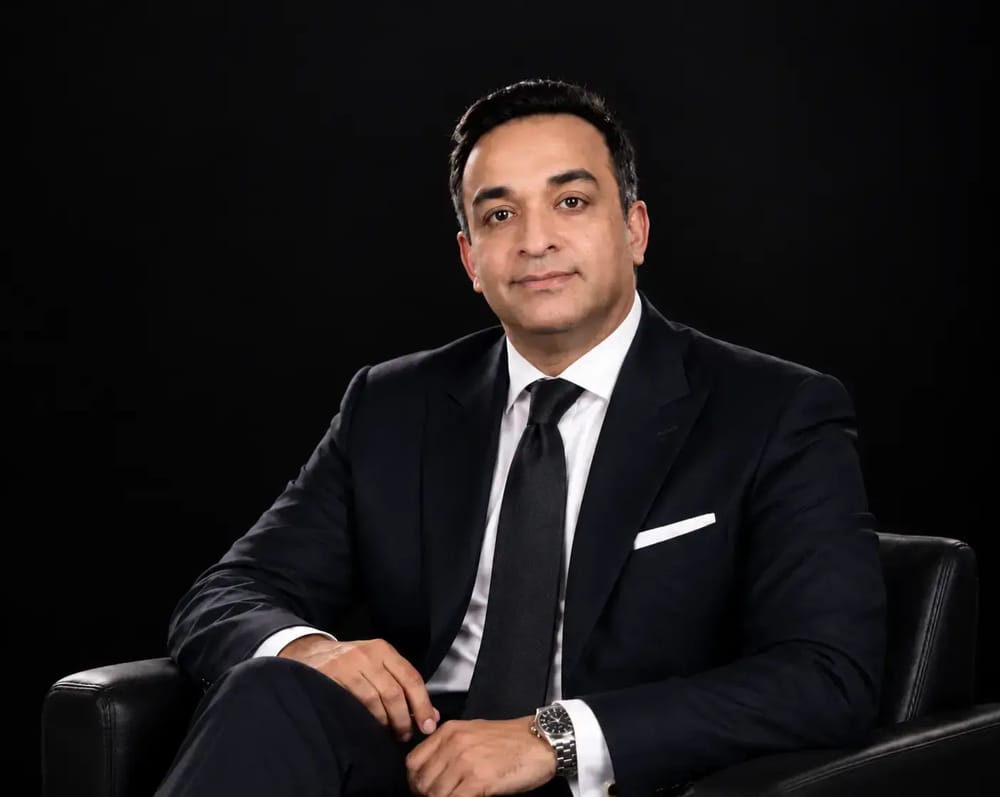
60 Sec Operational Alpha
DIFC vs. ADGM: The Operational Blueprint for UAE Fund Onshoring
Why tax rates are the wrong metric—and how your technology pipeline determines your jurisdiction.
▶️ Episode 1: DFSA vs. FSRA: Selecting the Right UAE Jurisdiction [01:00]
Transcript: In this 60-second briefing, Asset Management COO Anil Menon breaks down the critical structural division between the DFSA (DIFC) and FSRA (ADGM) frameworks. Discover why traditional fund placement demands a Dubai anchor, while private credit and digital assets thrive under Abu Dhabi’s regulatory sandbox. Align your infrastructure, protect your margins, and choose the playground that fits your technology pipeline. "This is Anil Menon. When international fund managers ask me whether to onshore in the Dubai International Financial Centre under the DFSA, or the Abu Dhabi Global Market under the FSRA, they usually compare tax rates. That is the wrong metric. Both zones are world-class, but they favor entirely different operational blueprints.
If your fund strategy hinges heavily on traditional institutional placement, private banking distribution ecosystems, and a deep, historical pool of local asset management talent, the DFSA is your natural anchor.
However, if you are architecting a framework around digital assets, private credit, tokenization, or tech-heavy venture structures, the FSRA's regulatory sandbox offers faster operational flexibility.
Structure your jurisdiction around your technology pipeline, not just your geographic address. Operational alpha starts with regulatory alignment. Choose the playground that fits your infrastructure."
▶️ Episode 2: The Hidden Margin Drag in Multi-Asset Tech Stacks [00:58].
"This is Anil Menon. As GCC funds scale and diversify from liquid assets into private credit or real estate, a quiet margin killer emerges. It is the fragmented tech stack.
Many firms run their legacy systems side-by-side with separate, manual spreadsheets for alternative assets. This creates data silos, manual reconciliation loops, and human-error risks that premium institutional investors refuse to accept.
True operational alpha requires an integrated, multi-asset architecture. Whether you deploy an institutional platform like Aladdin or build a unified API middle-office framework, your ledger must provide a single source of truth.
Eliminating these manual bottlenecks can reduce middle-office processing times by up to forty percent. If you want to protect your fund margins as you scale, fix your infrastructure first. Execution is strategy made visible."
▶️ Episode 3: Navigating the New Saudi CMA Onshoring Bottlenecks [01:00]
"This is Anil Menon. When onshoring an asset management business or fund structure into Saudi Arabia under the CMA, global firms make a classic mistake. They focus purely on the legal filing entity.
The actual bottleneck that delays launches by months is third-party custodian alignment. The CMA requires tight local integration, and global tier-one custodians do not always communicate seamlessly with local Saudi platforms out of the box.
To bypass this drag, your operational framework must build a hybrid custody architecture. Map your local Saudi sub-custody rails directly into your global master custody network before you submit your CMA application.
Do not let infrastructure delay your market entry. True operational alpha means your systems are ready to deploy capital the exact day your license is stamped. That is the execution edge."